

how I write
things I've learned about the elusive "creative process"

This essay is very kindly sponsored by Sublime, the tool I use to save, organize, and find new inspiration, for my essays, topics I am researching, and all my creative work. It’s a beautifully simple tool that helps creative people collect and connect ideas. Try it here.
I’ve been writing consistently on Substack for just over two years, and in that time, I say with so much gratitude that it’s changed my life as a writer. Crystal Clear has grown into an intentional, kind, engaged community of 45,000 readers in over 180 countries (what!), with essays read by over a million people in the past year. I pour hours every week into exploring and analysing the most important lessons I learn about what it takes to build a genuinely happy life, but have never written at all about my process behind the scenes.
So I asked you, my lovely readers, what questions you have about the creative process behind my writing, whether it’s for my Substack, or for my book. In this essay I’ll answer some of them, and share some notes about the creative habits and tools that work best for me.
Coming up with ideas
I got a few variations of the question: how do you come up with topics to write about? And to answer that, I want to explain why I write in the first place.
I write as a way to understand life better. I am a better thinker when I’m putting words on the page rather than when I try to make sense of them in my head, and sometimes I think that without writing, I wouldn’t process half the things I am learning in this lifetime. Writing is how I make sense of the world and my experiences, and how I turn those experiences into solid lessons that I can keep carrying with me. The focus of my writing is sharing the biggest lessons that I learn on designing a truly happy and fulfilling life, because the core question in my life is: What can I personally do to ensure I’m giving myself a life that is genuinely the happiest and most fulfilling it could be?
Most of my time, the topics I write about are an answer to this question. There’s no part of my process that includes me actively brainstorming new topics to write about; instead I make a practice of always listening. Listening to myself through journaling every day, paying close attention to my strongest feelings, and always trying to understand what every experience is teaching me. As I go about life actively listening, topics keep arising – and they immediately get added onto a list in my notes app, that I pull from every time I sit down to write an essay. It’s a long list of topics, statements, realisations, questions, and lessons that seem the most important to me in my quest for continually answering that big question.
On a practical level, I don’t plan a posting schedule far in advance. I know I do my best work when I work intuitively, and I never want my writing to feel like something I am forced to do. So it’s really important to me to preserve the intuitive, inspiration-based nature of writing as much as possible even when running a monetised Substack. I commit to publishing a set amount of times every month, and every time it’s time to write, I go with the topic I feel most drawn to that day from my list. It’s a balance between making sure I’ll always stay consistent, while simultaneously doing everything to keep the enjoyment and fun in writing.
Collecting inspiration, research and sources
In my subscriber chat, someone asked: “Where do you find sources and how do you keep track of all of them?”, and someone else asked: “I would love to know if you do a lot of research before a post or is a lot of it personal opinions/perspective?”. So let’s talk about the research side of things, because it’s crucial to everything I do.
To start with the latter question, my writing is always informed by my personal opinions and perspective, and at the same time backed by credible sources that I find that can add to the value I bring to my audience. For example, my most recent post “the ultimate guide to rewiring limiting beliefs” was a particularly research-heavy one, because while addressing your limiting beliefs is such a subjective experience, I wanted all the tools and methods I’m recommending to be backed by research that confirms they indeed work.
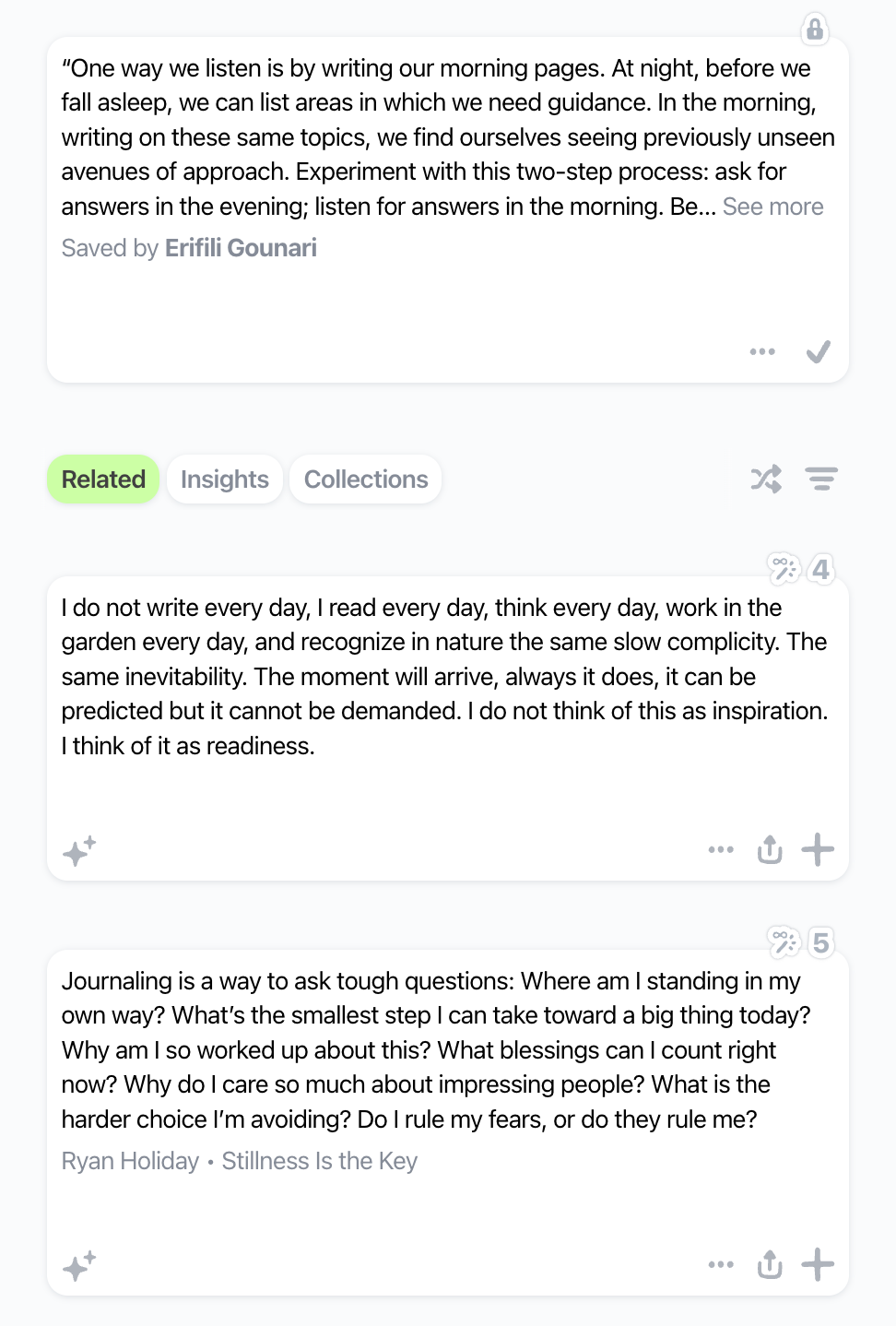
This is where Sublime comes into play, the tool that I and so many other writers and creators use to support our process. What I love the most about Sublime is that you use it not only to organize your sources, but also to find new sources and inspiration that you otherwise wouldn’t have discovered. This is my favorite thing: if I’m reading an article or book and I save an interesting quote into Sublime, then it gives me more related quotes saved by other users, on the same topic. I love how this enables me to go deeper into a rabbit hole of a topic I’m exploring in my writing, and to discover so many new sources, books, articles, and ideas.
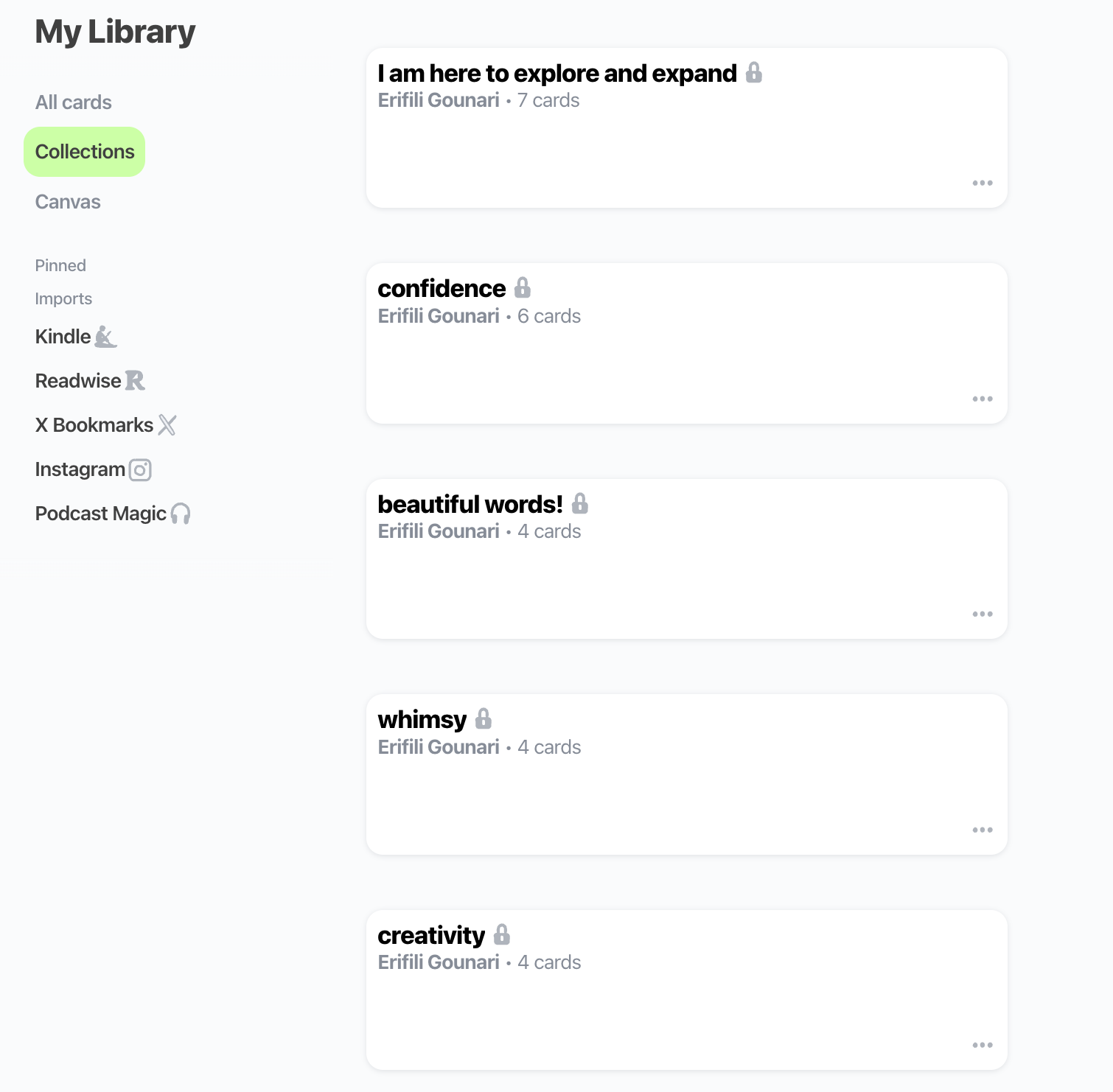
Every time I sit down to write an essay, I check my Sublime collections, where I’ve saved various bits of inspiration over time. I’ve categorized my collections into broad topics, such as “self-belief”, “big dreams”, “creativity”, and that makes it so easy to find interesting ideas to pull from any time I need inspiration for writing a new piece. I also have a Sublime collection called “writing”, where I save quotes from books I read about writing itself. I’m currently reading Natalie Goldberg’s Writing Down the Bones, and there are so many snippets I’m saving as I go. Sometimes just reading about writing gives me so much inspiration to try new things, consider different lenses, and be more experimental and intentional in how I write. You just never know where your next big idea will come from!
What happens on the writing chair
Another great question in my subscriber chat was:
Do you ever lose the motivation for or thread of a piece midway through? What do you do to enable yourself to finish? I often find that if I take a couple days break, it’s really difficult for me to get back to the same headspace I was in previously.
I love this question because it’s something that always comes up among my writer friends, and the discussions remind me just how vastly different everyone’s creative process is. What I’ve found is that for short-form writing such as essays, the only thing that works for me is sitting down and writing each essay in a one-off focused session, getting myself into a flow state, rather than working on it over multiple days. I set aside a block of time that I dedicate to writing, and allow myself to fall as deeply into the rabbit hole of inspiration and engagement with the topic as I can.
I completely understand this reader’s issue of finding it “really difficult to go back to the same headspace” if you take a long break, because I’m exactly the same. When I try to work on an essay over multiple days and do a little bit here and a little bit there, I find that I personally disconnect from the topic and find it harder to think more deeply. The more time I spend focusing on something, the deeper my thinking gets, and the better I can explore the topic and all its nuances. So, this is what helps me do my best thinking (and by extension writing), but this process will be completely subjective and different for everyone!
I’ll also share with you a funny little trick that has honestly completely transformed my ability to focus. I stumbled upon this when I was writing my first book, and was given a 4-month deadline for 65,000 words. In other words, I had to absolutely lock in, and get laser focus like never before. This is where someone recommended I listen to brown noise: this type of static noise that helps your brain focus. I don’t know how it works or why, but one thing I’ll say is that for me, it works like absolute magic. When I put on my headphones and go back to my beloved 8-hour brown noise YouTube video, it literally feels like a switch flips and suddenly I feel like I don’t blink for the next 2 hours and words just write themselves. Maybe it’s a placebo, I don’t know and honestly don’t mind either way, as long as it works.
Finding your own writing voice
Lastly, someone asked:
What makes some essays resonate more than others, even if the topic and information is the same?
I wholeheartedly believe that you escape competition by figuring out who you are. My dad is a photographer, and he taught me early on that if you put 100 photographers in the same room and ask them to take a picture, they will all take a different picture. The same happens with writing: you can have 100 Substack writers write about the same topic and deliver the same conclusion, but one of them might blow up and get millions of reads. I honestly believe that it’s not the topic itself that resonates with people, but rather the exact unique perspective of the person who wrote about it, even if they’re not saying anything “new”.
We each carry a completely unique amalgamation of influences, tastes, experiences, and beliefs, so if you’re hesitating to write about a topic because it’s already been written about a lot, that’s kind of none of your business. Because it’s never been written about by you. A tiny minuscule subconscious detail in your personality or experiences might make your own exploration of a topic resonate widely with others, in a way you won’t be able to explain. It is what it is – a happy coincidence that takes place when you focus on creating from a place of as much authenticity as you can muster.
Keep writing things that you believe wholeheartedly, and the resonance will follow. Have fun with it, do whatever it takes to preserve as much enjoyment in the process as humanly possible, and the resonance will follow. I am still learning so much, but one thing I know for sure is that stressing out about finding your voice might only guide you further from the voice that’s trying to be expressed, that’s already within you. That’s the voice you’re seeking!

For someone who is trying to grow here (or thats what i try to tell myself) i think this was one of the few pieces i needed to read. Super insightful and lovely 🙌
love everything about this